


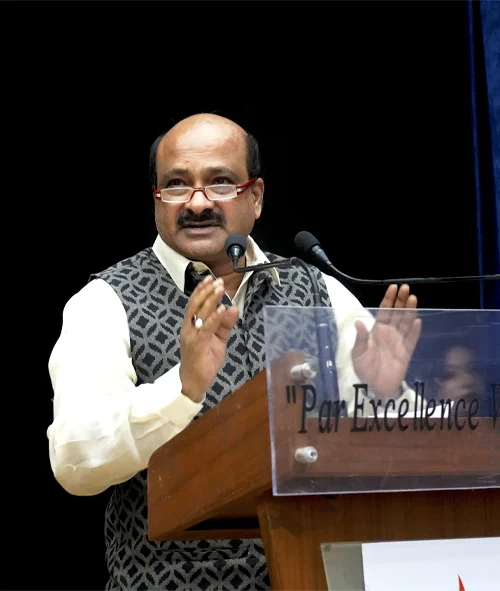
In the evolving landscape of Indian higher education, Dr. Picheswar Gadde stands as a pioneering institution-builder whose work has fundamentally changed education toward national development and social equity.
As Chancellor of Lingaya’s Vidyapeeth, one of the prominent Deemed Universities in the region, he has shaped an academic ecosystem that has educated over 40,000 students while generating sustained employment for nearly 3,000 individuals annually.
Under his leadership, 7 major institutes comprising more than 13 specialized colleges operate across diverse academic disciplines, reflecting both scale and structured diversification.
Read more...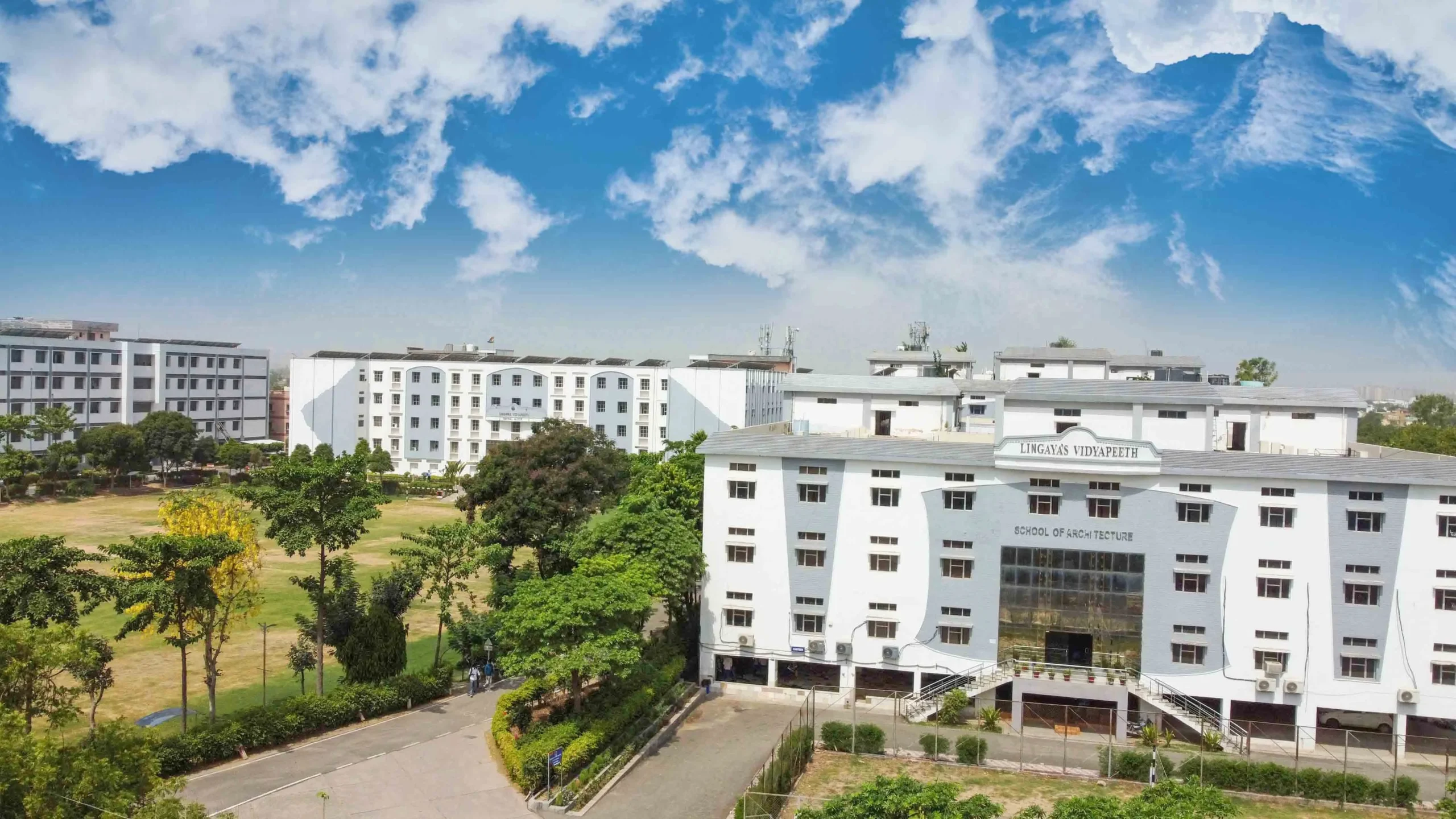
Lingaya’s Vidyapeeth now stands as the academic pinnacle of the Group, offering programs across Engineering, Education, Law, Pharmacy, Architecture, General Sciences, Arts, Fashion, Journalism, and more. With 850 engineering seats annually and fees starting at an accessible ₹17,000, the institution continues to embody affordability without compromising excellence.
Read More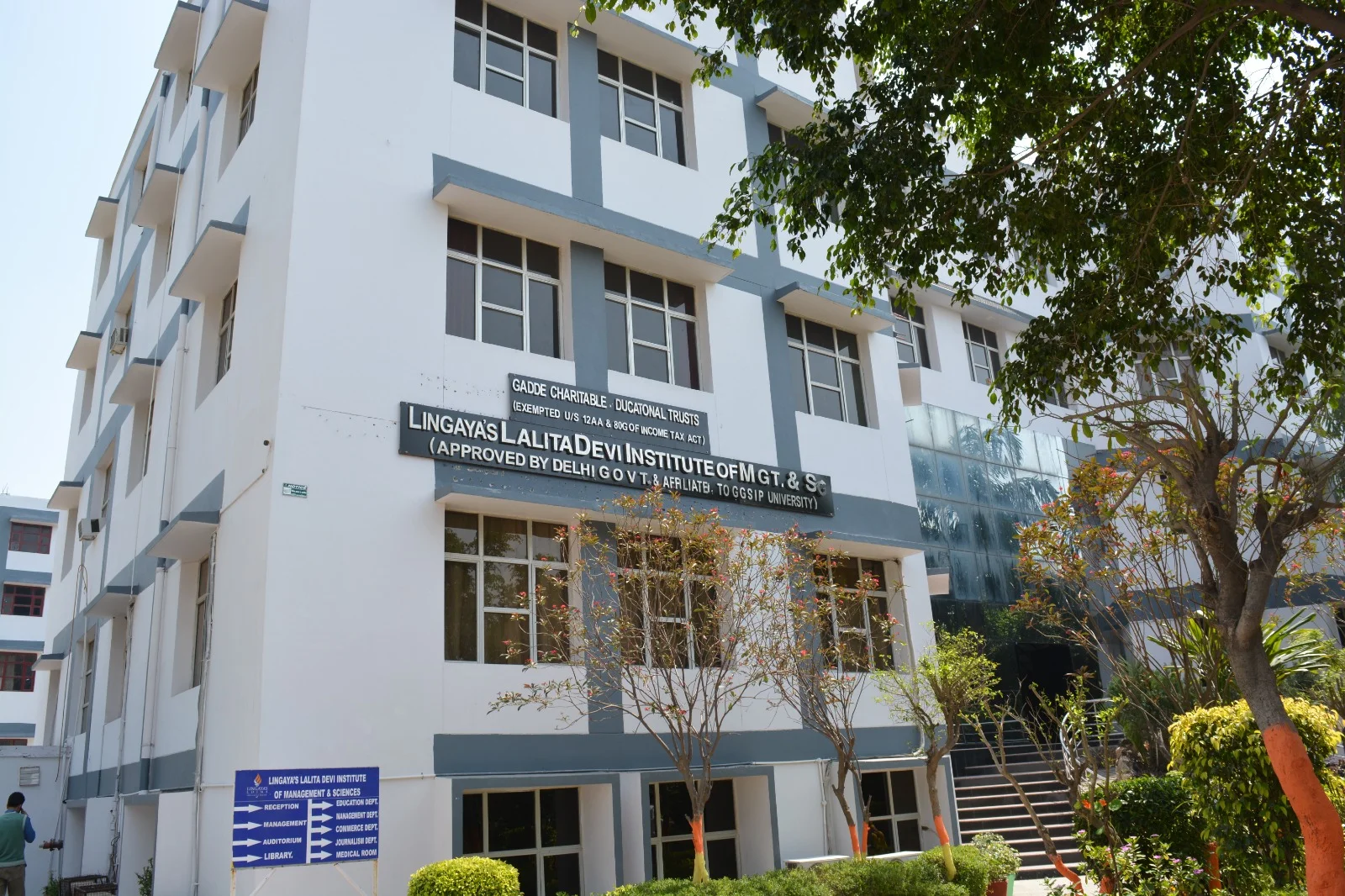
Established in 2005 under the Gadde Charitable Education Trust, Lingaya’s Lalita Devi Institute of Management & Science was founded to extend quality management and professional education into the heart of the capital. The institute focuses on commerce, management, and allied disciplines, equipping urban youth with industry-relevant competencies while upholding affordability and discipline.
Read More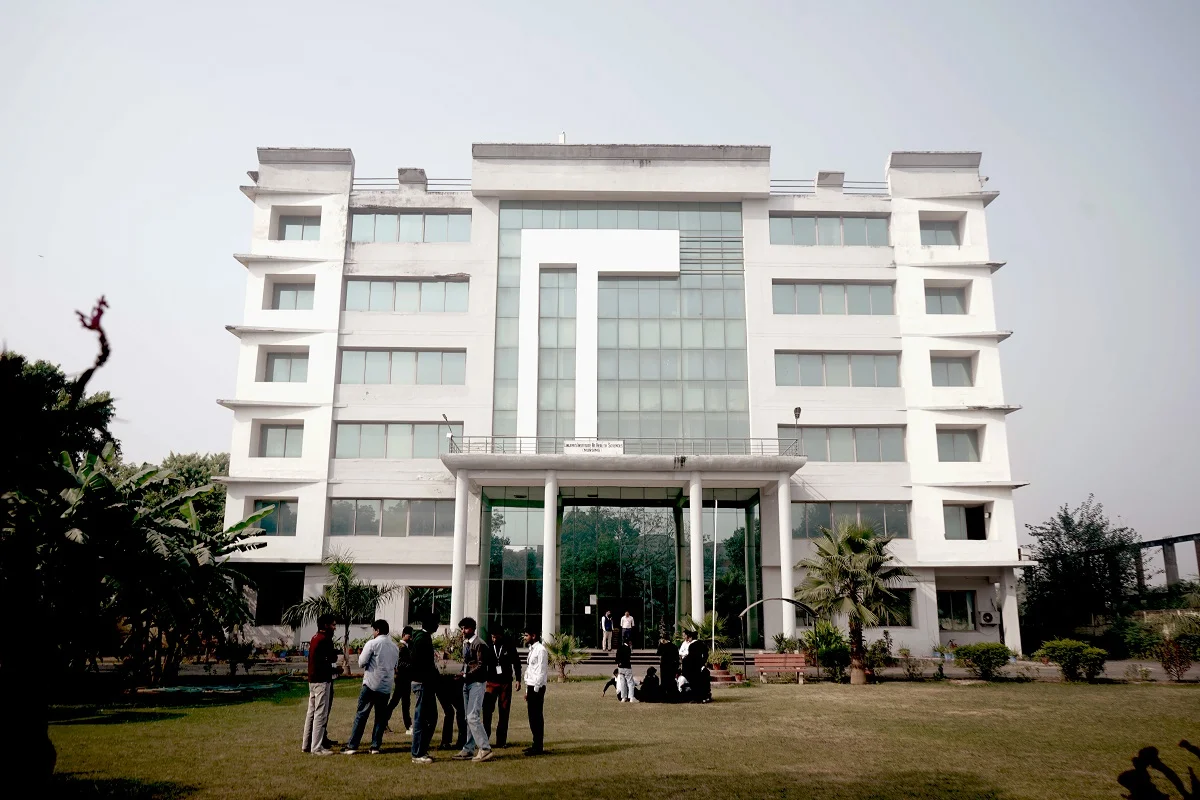
Recognizing global demand for healthcare professionals, particularly nurses, he established Lingaya’s Institute of Health Sciences in 2007. Understanding that many capable students could not afford MBBS or BDS, he opened pathways in nursing and later paramedical sciences. Thousands have since found dignified careers in India and abroad, transforming financial limitations into global opportunity.
Read More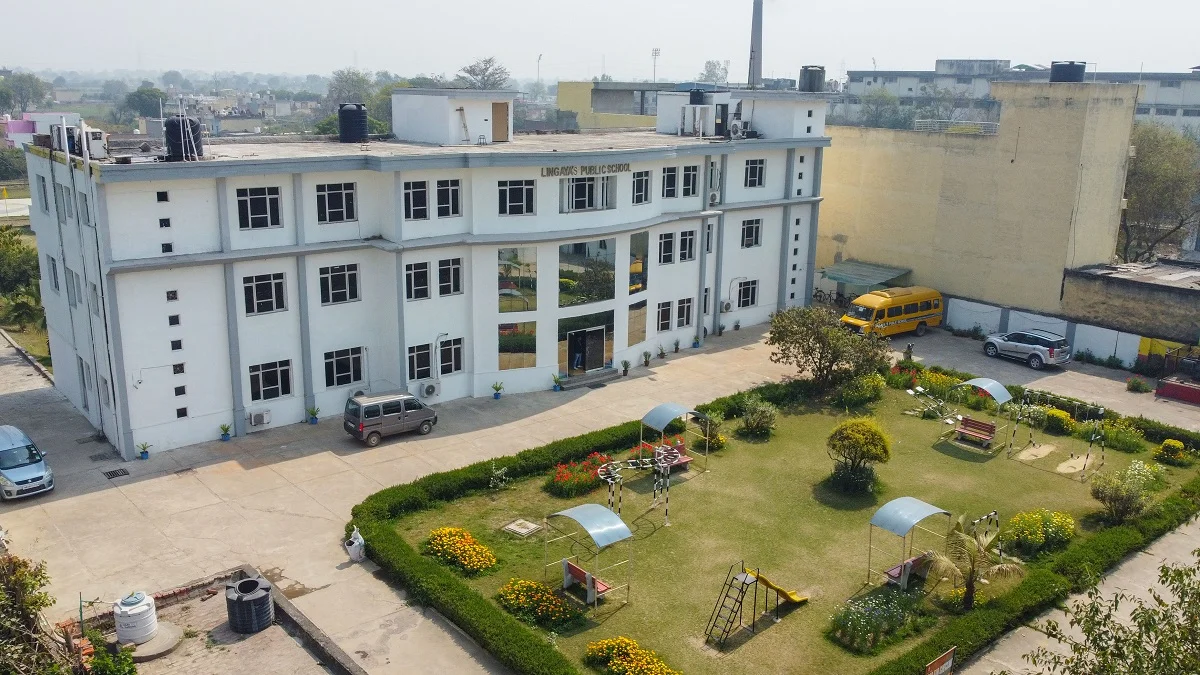
Lingaya’s GVKS Institute of Management & Technology strengthens technical and managerial education within the region. Focused on employability and skill integration, the institute carries forward his philosophy of blending theoretical rigor with practical exposure, preparing students for immediate professional engagement.
Read More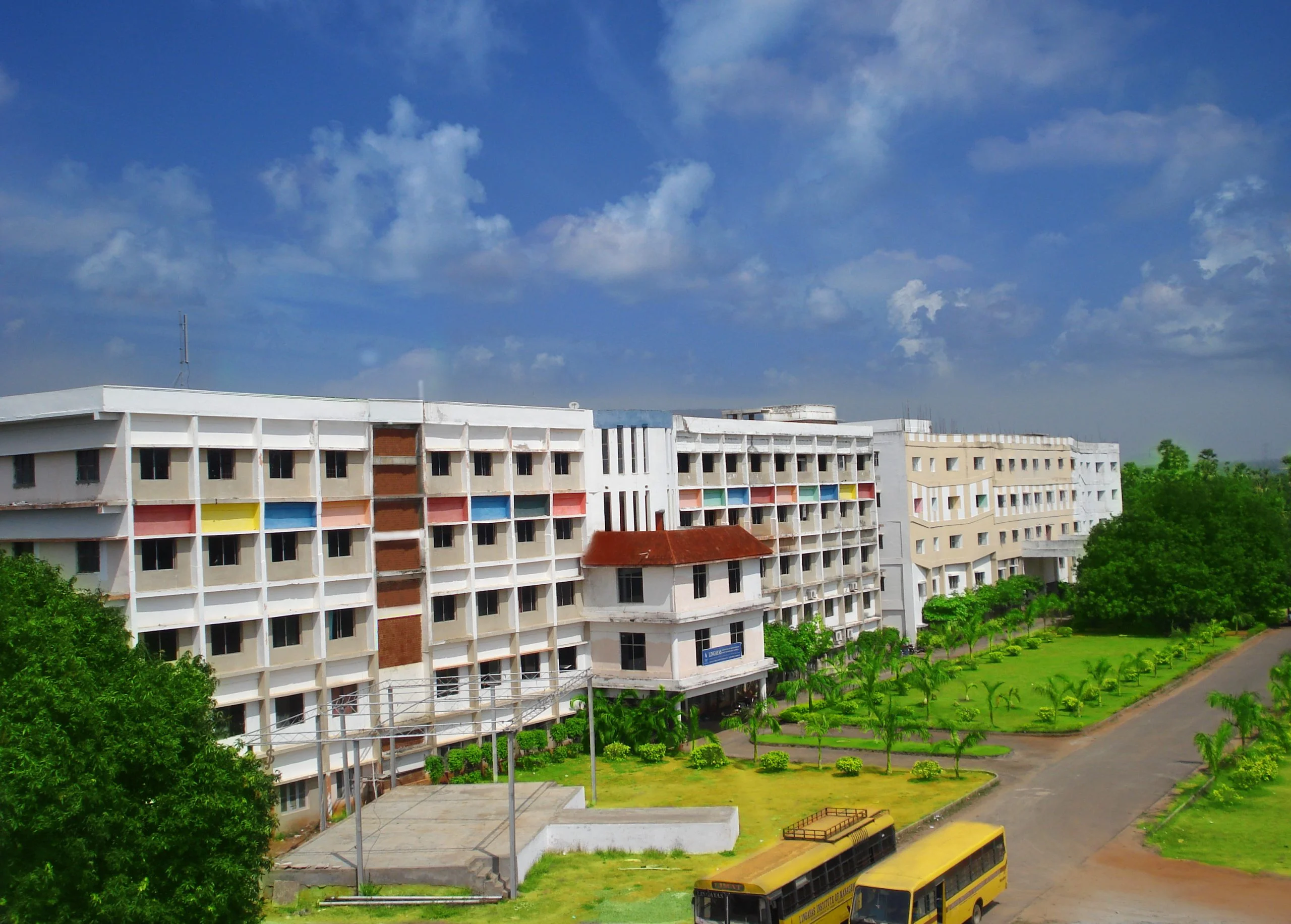
Returning to his roots in Andhra Pradesh, he established Lingaya’s Institute of Management & Technology in 2008. This expansion brought quality engineering and management education to southern India, extending his mission beyond Delhi NCR and reconnecting with the land of his birth.
Read More
Believing that transformation must begin early, he founded Lingaya’s Public School in 2011 under Lingaya’s Jankalyan Shikshan Sansthan (later Lingaya’s Society) with CBSE board. With over 900 students and a nominal fee structure of approximately ₹2,200, the school integrates smart classrooms and modern infrastructure while prioritizing equity. It stands as proof that quality schooling need not be financially exclusive.
Read More
Lingaya’s Academy complements the Group’s educational outreach by focusing on preparatory and foundational programs. It nurtures academic discipline and competitive readiness, ensuring students are equipped to transition confidently into higher education and professional domains.
Read More
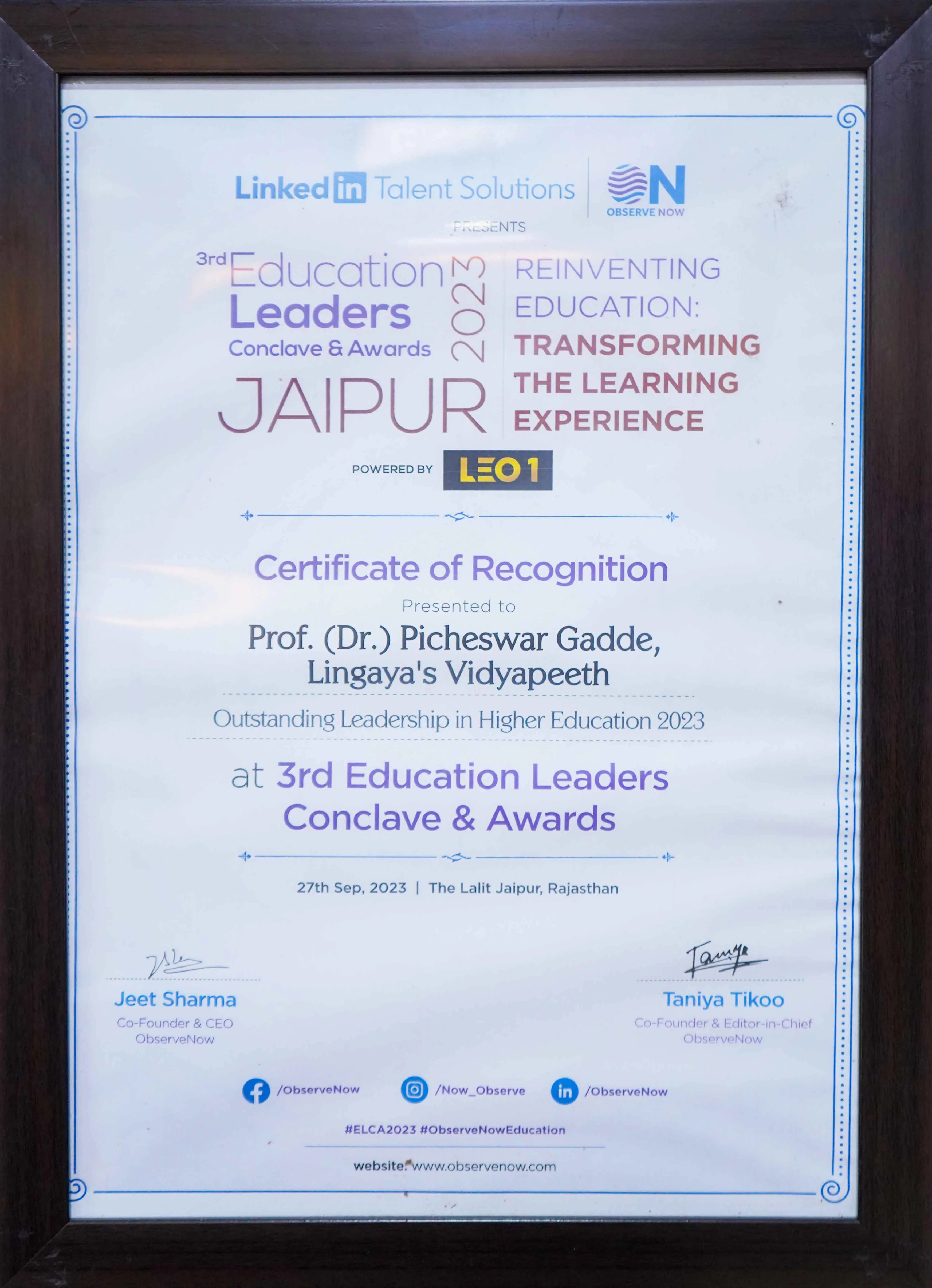
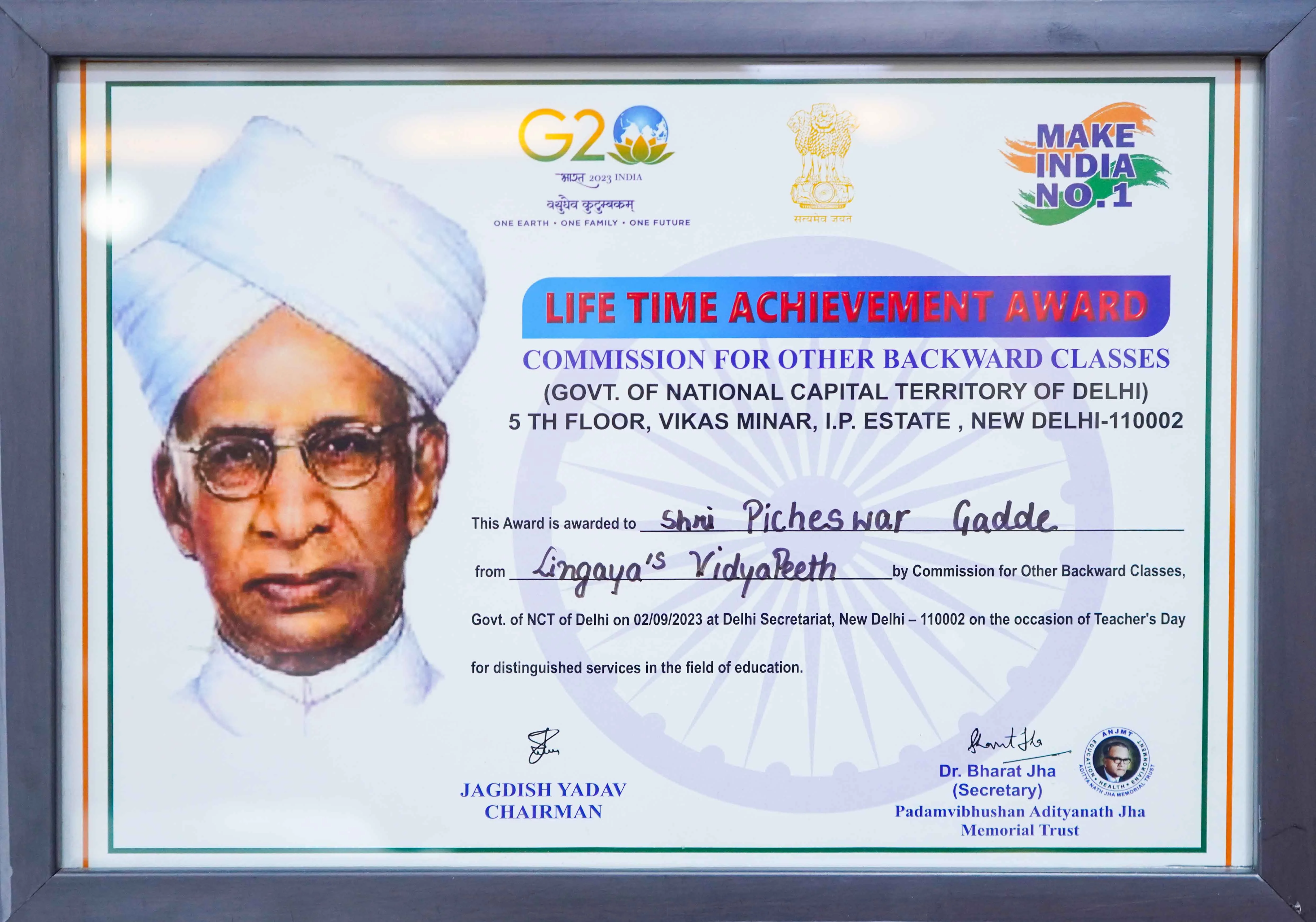
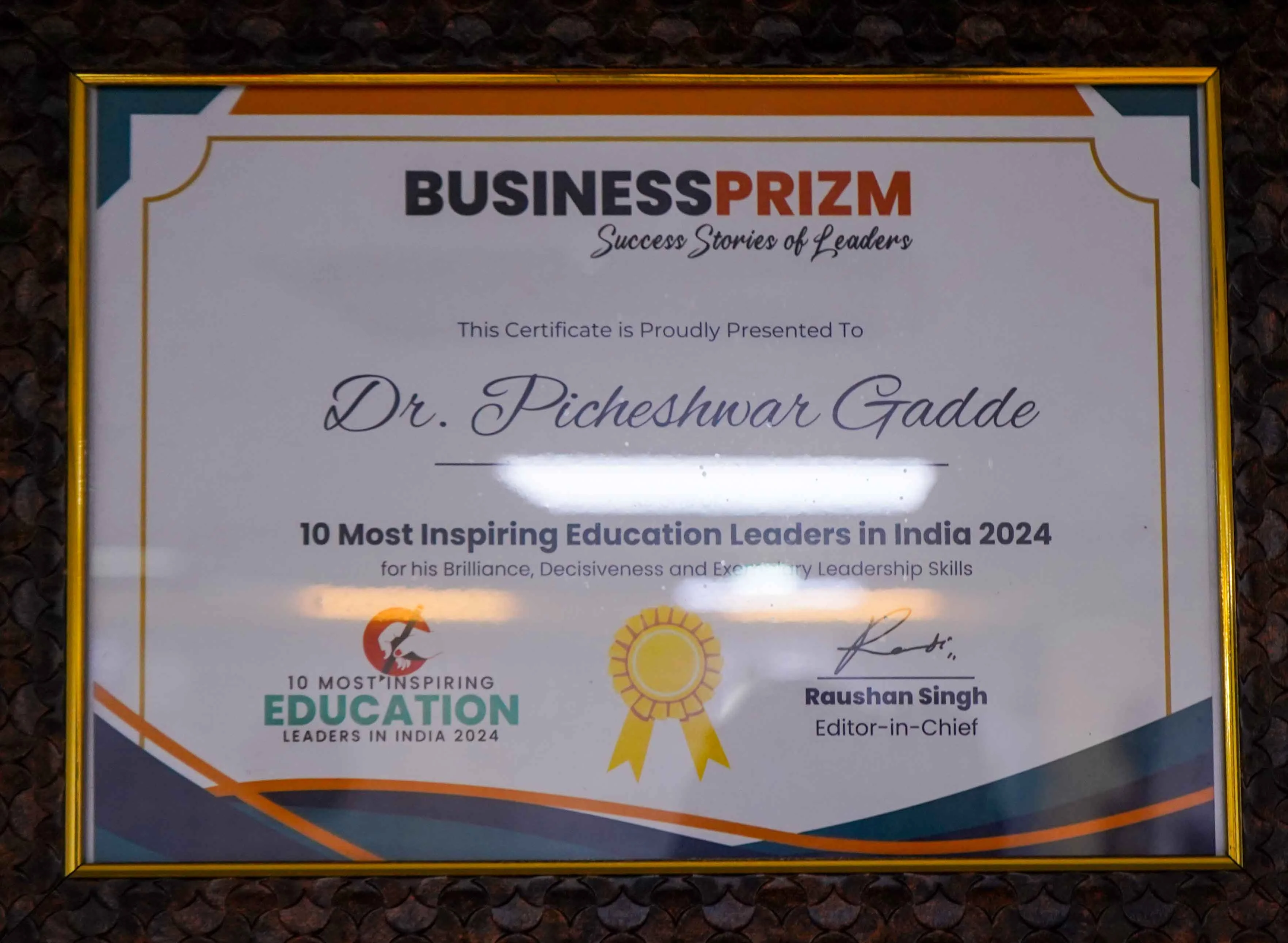
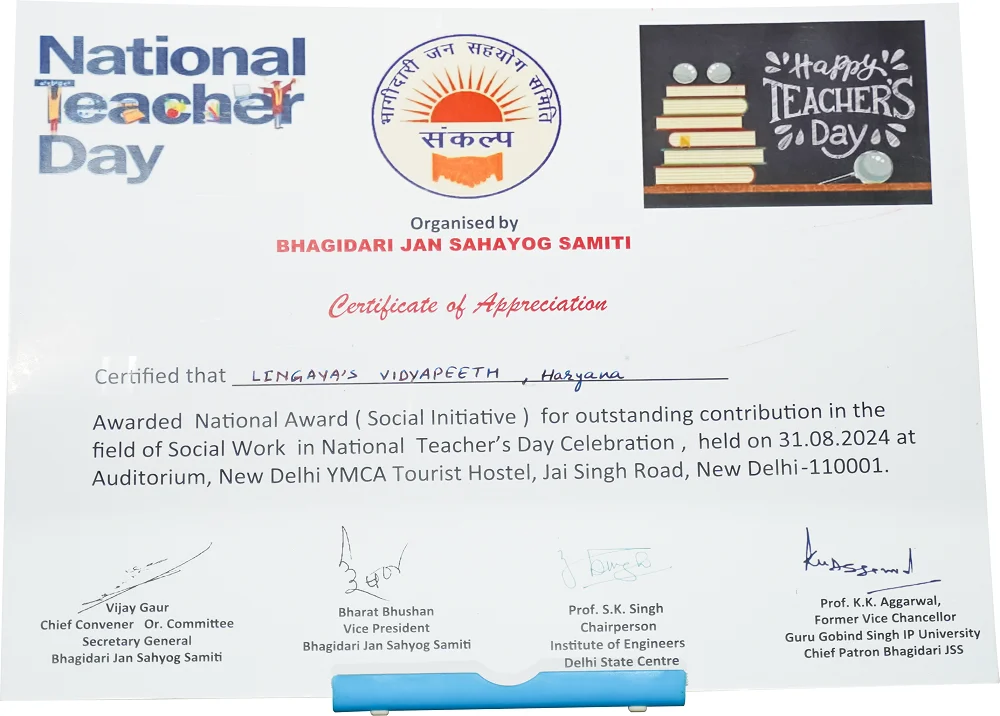
Recognized for outstanding contribution in education and institutional leadership.
Honored for visionary leadership and global impact in education sector.
Awarded for excellence in innovation, accessibility, and academic development.
Recognized for shaping future-ready professionals and skill-based learning.
Honored for contributions toward social development and education upliftment.
Recognized for rapid institutional growth and academic excellence.
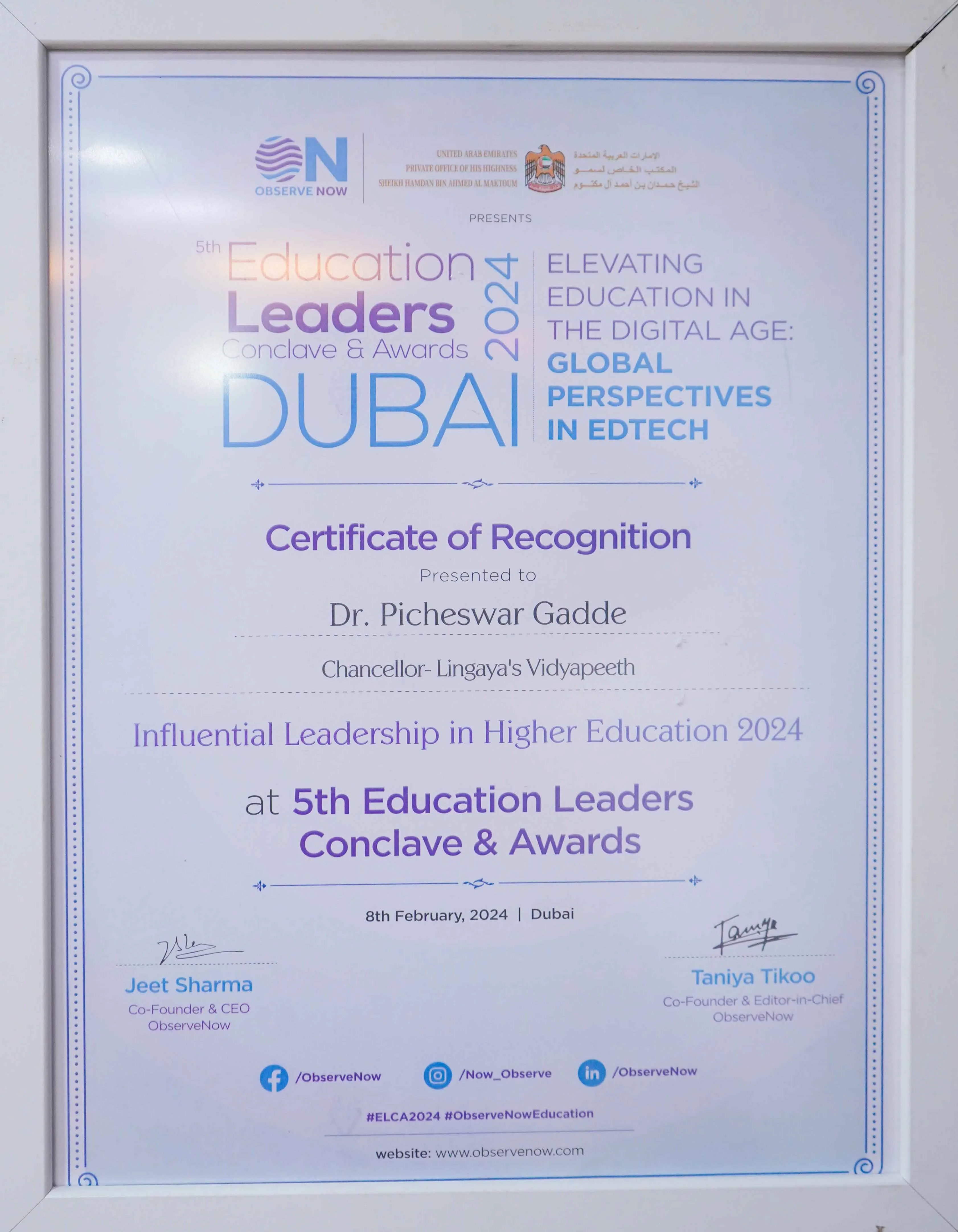
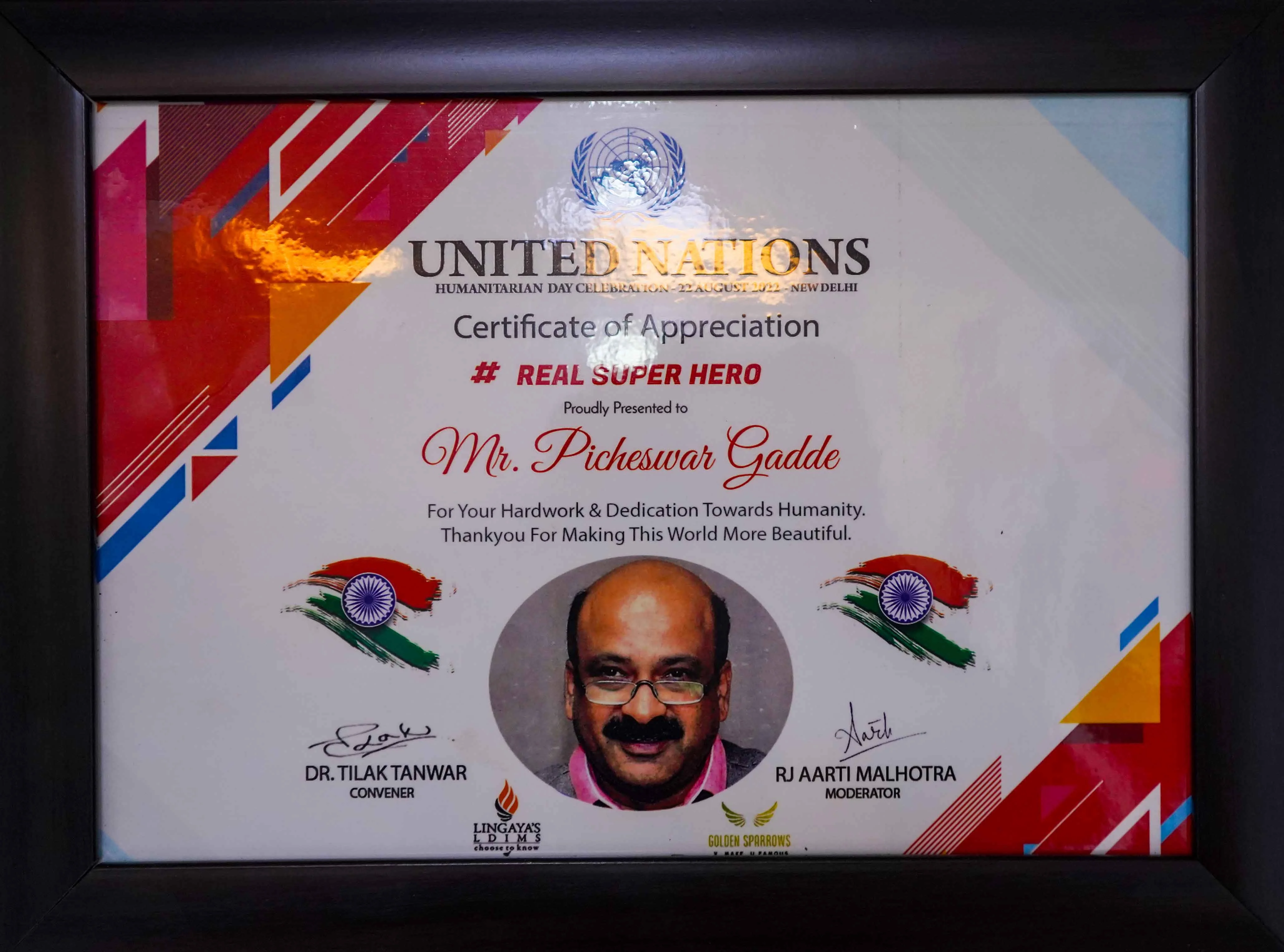
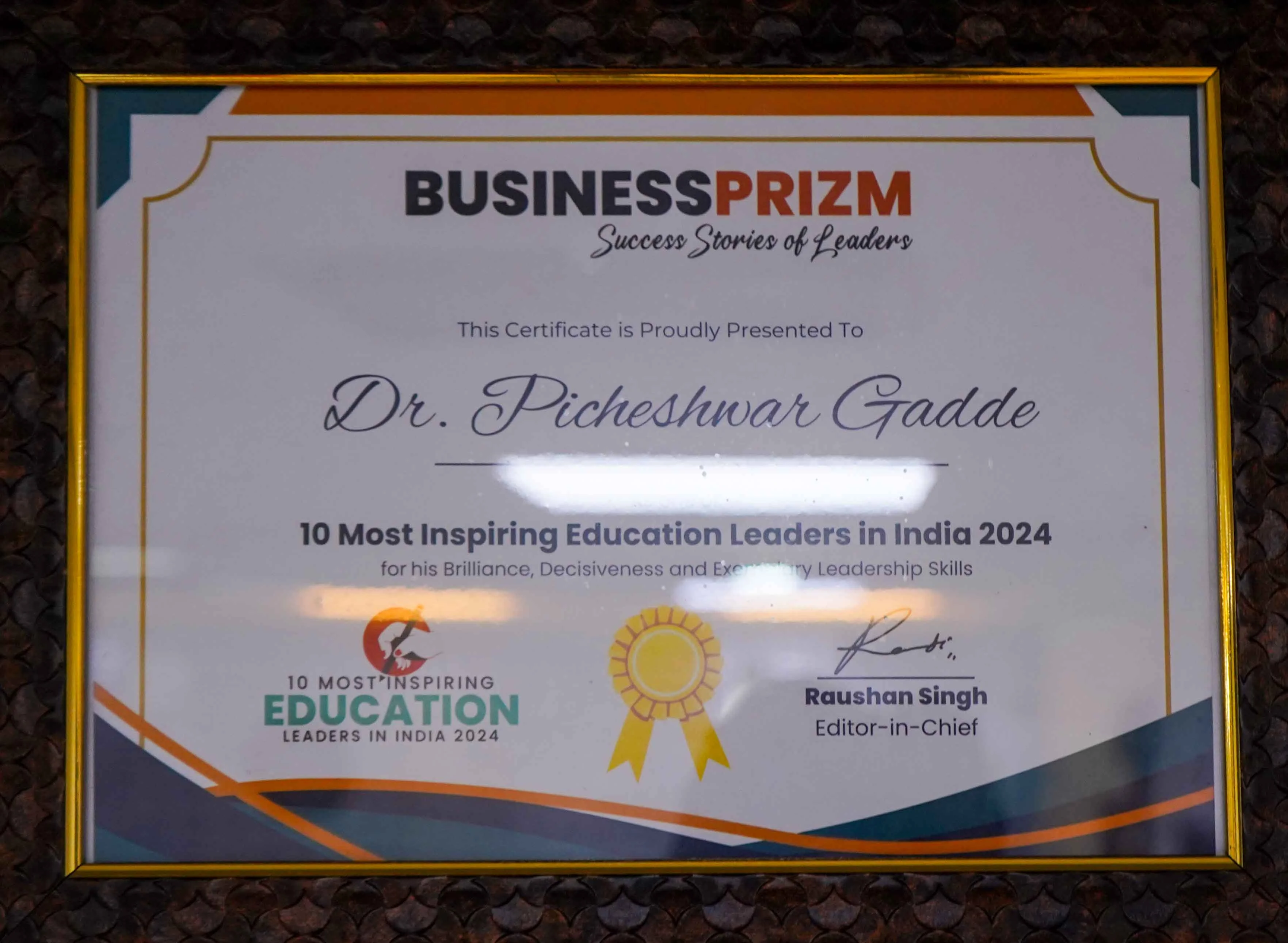
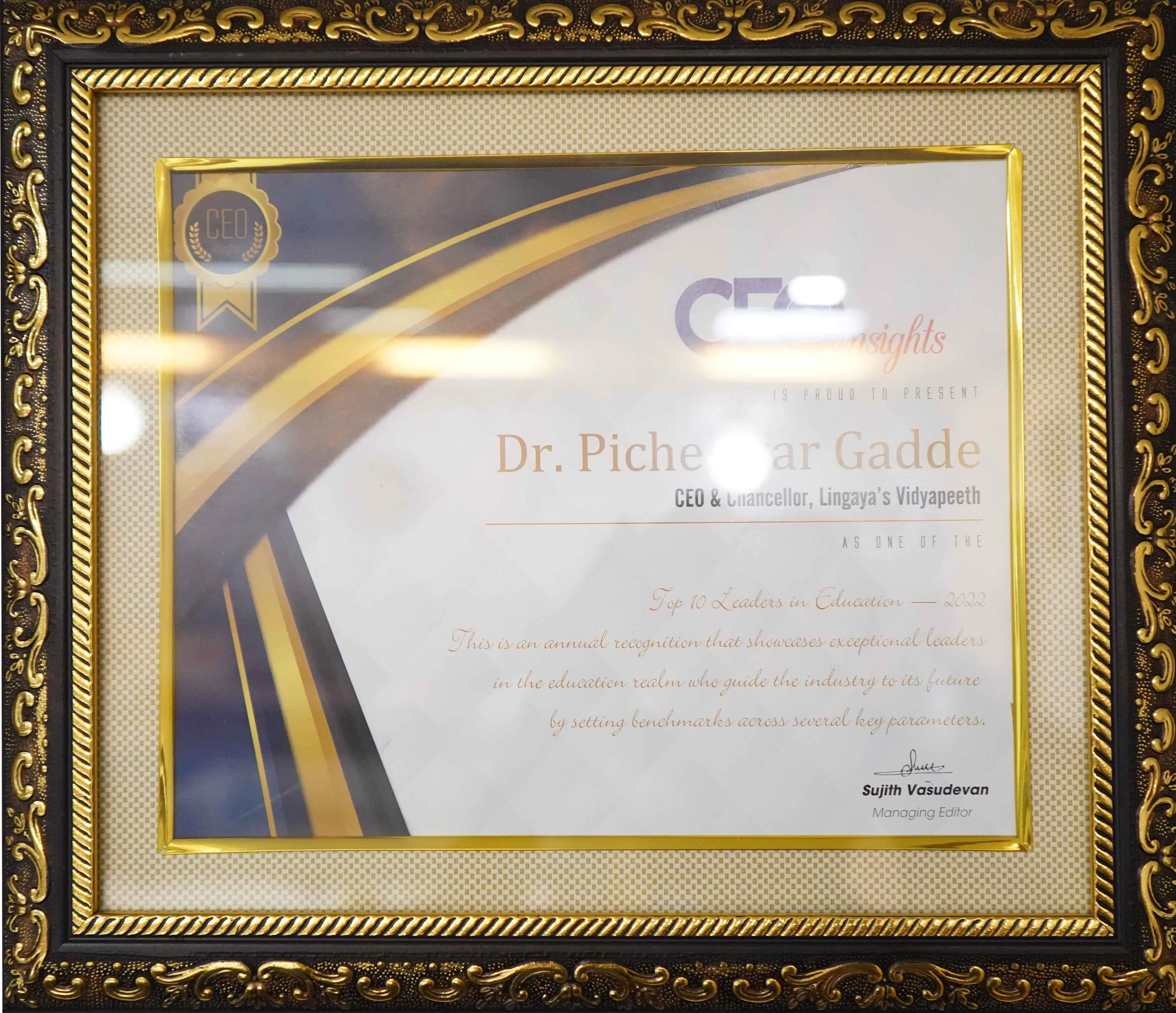

Key leadership roles and responsibilities
Association of Self Financed Institutions in Haryana.
Federation of All India Medical & Engineering Colleges Association.
Sardar Vallabhbhai Patel International School of Textiles & Management (Government of India).
Haryana State Counseling Society, Govt. of Haryana.
All India Consortium for Indian Universities (170 Universities).
North India Universities Association (13 Universities).
The most visible societal impact of his work is the large-scale social mobility it has enabled. By opening structured, affordable pathways into professional education, his ecosystem has converted education into economic stability for tens of thousands of families. Graduates entering corporate sectors, healthcare systems, public services, and global markets generate sustained household income, reducing dependency cycles. The effect extends beyond individual employment—local economies strengthen when educated youth remain productively engaged. His institutions have become engines of upward mobility, particularly for first-generation learners who otherwise might have remained confined to informal or low-income sectors.
His model has contributed meaningfully to workforce formalization in India. By aligning curriculum with industry demands and expanding into allied health, paramedical, law, education, and vocational domains, he has supported sectors facing skill shortages. Nurses serving internationally, engineers in multinational firms, paramedical staff in hospitals, and trained professionals in emerging technology domains collectively strengthen India’s global human capital reputation. Additionally, students joining the Armed Forces reflect a dimension of national contribution that goes beyond economic metrics. The societal outcome is a disciplined, skilled, and globally competitive workforce emerging from accessible educational systems.
Through village adoption initiatives and structured student outreach programs, he has created a bridge between academic institutions and grassroots realities. Health awareness, hygiene education, sanitation practices, and water management interventions led by students generate measurable improvements in community behavior. This approach transforms higher education into a participatory social development mechanism. Rather than isolating campuses from society, his model integrates learning with lived service, cultivating socially responsible graduates while simultaneously uplifting underserved communities. The societal impact is dual—behavioral change at the grassroots and civic consciousness among educated youth.
Perhaps the most enduring impact of his work is intangible yet profound—he has modeled value-based institutional leadership. By personally engaging with students, emphasizing love for one’s roots and country, and upholding discipline alongside compassion, he has inspired a culture where success is intertwined with responsibility. For many students and faculty, he represents proof that leadership in education can be visionary yet humane. His journey from founding a single institute to building a multi-institutional educational movement serves as a motivational blueprint for educators, entrepreneurs, and policymakers.
His most significant impact lies in democratizing professional education. By maintaining low fee structures, offering sponsored education to over 2,000 students, and designing affordable programs for working professionals, he has systematically lowered financial barriers that traditionally restrict higher education. This has reshaped access patterns in the country and beyond, particularly for first-generation learners. His institutions have enabled thousands from modest socio-economic backgrounds to enter engineering, healthcare, management, law, and allied professions—fields often perceived as financially inaccessible. The ripple effect is intergenerational mobility: families that once viewed higher education as a distant aspiration now see it as attainable reality.
Another measurable impact is the strengthening of the employability ecosystem. By institutionalizing industry-led curriculum revisions, embedding skill baskets within degree programs, and conducting large-scale annual placement drives, he shifted the educational conversation from degree acquisition to career readiness. The consistent engagement of over 100 companies annually and sustained placement outcomes have built employer trust in institutional graduates. This model reduces the employability gap that often plagues higher education in India. Instead of producing academically qualified yet industry-unprepared graduates, his framework generates workforce-ready professionals with technical competence, communication skills, and global exposure.
His emphasis on 360-degree development has redefined institutional culture. By integrating soft skills, confidence-building, leadership orientation, sports, rural engagement, and global exposure within academic life, he has influenced how holistic education is operationalized rather than merely discussed. The mandatory training from second year onward and structured professional grooming ensure that personality development is not incidental but systemic. This model has contributed to producing graduates who are not only technically skilled but socially aware, disciplined, and adaptable—qualities essential in a rapidly changing global environment.
Beyond individual campuses, his policy roles and academic governance contributions have strengthened the broader educational ecosystem. His representation of private universities within state-level education bodies helped foster collaborative frameworks between public and private sectors. His leadership in revamping curriculum structures, promoting AI integration, and enhancing faculty development created replicable institutional standards. By prioritizing continuous syllabus revision and faculty upskilling, he has normalized academic dynamism—an essential reform in a traditionally rigid system.
Collectively, his impact extends beyond institutional growth; it reflects structural transformation—expanding access, aligning education with employment, embedding holistic development, and modernizing governance within the Indian higher education landscape.
Feel free to reach out for any queries.
📍 Address: Lingaya’s Vidyapeeth, Faridabad, Haryana, India
📞 Phone: +91 9876543210
✉ Email: info@lingayasvidyapeeth.edu.in